What is junk journaling? It is making or filling a book with mixed papers, personal notes and things you want to keep. A receipt, an envelope, a photograph or a printed flower can all belong on the same page. You do not need to make it look old, use a particular colour, or fill every empty space.
Finished journals can look complicated, but you can start with an ordinary notebook and a few things you want to keep. Arrange them in a way you enjoy. The decorated cover and stitched pages can come later.
What makes a book a junk journal?
There is no single layout to follow. Some makers build books from loose papers; others work inside an ordinary notebook. Junk-journal maker Justine Jenkins describes the craft through its mix of found, reused and collected materials. Bought papers can sit alongside those everyday scraps.
A useful way to think about a spread is to give it one job. It might record a walk, hold a ticket, collect colours you like, or give you somewhere to write about the week. That small decision makes it easier to choose what stays on the page.
What can you put in a junk journal?
- Background papers: plain paper, packaging, maps or printable journal pages.
- Things to keep: notes, copies of photographs, tickets and small envelopes.
- Writing pieces: a tag, a library-style card or a folded sheet tucked into a pocket.
- Decorative pieces: fussy cuts, labels, fabric scraps or a narrow strip of patterned paper.
Leave out anything you do not want to store. Food-stained wrappers, bulky objects and fragile originals can create more trouble than they are worth. You can photograph an object or print a copy of an important paper instead of gluing the original into the book.
One easy botanical page to plan
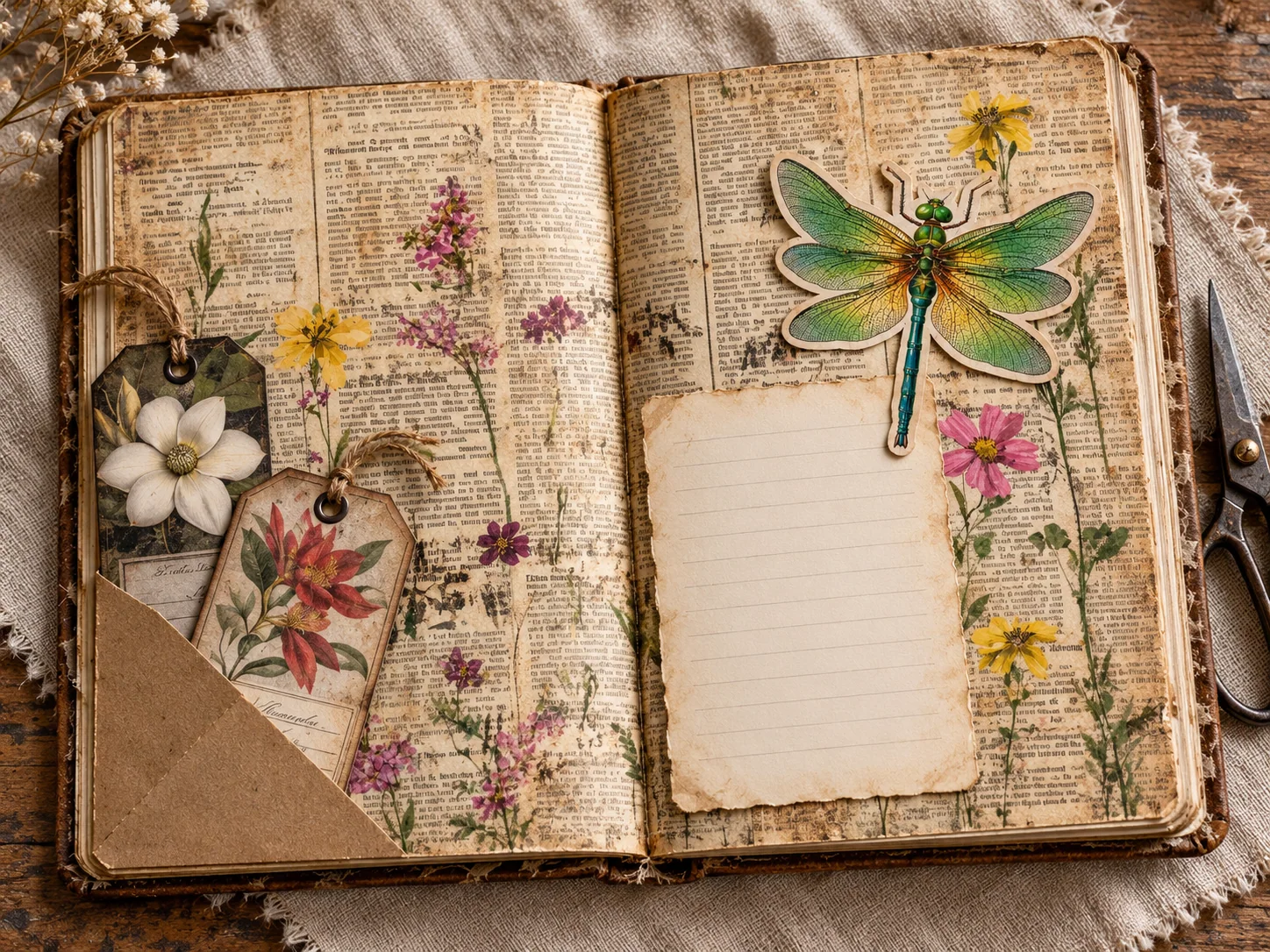
For a soft vintage background, try our Vintage Newspaper Wildflower Journal Papers. Cover only one side of a spread at first. On the opposite side, leave room for a few lines about a place you visited or something you noticed outside.
Add a small paper pocket and slip in one of the Botanical Pocket Labels and Tags. The tag gives you a removable place to write, so a longer note does not have to cover the main page. Keep the pocket opening clear. A Vintage Dragonfly Fussy Cut can sit near the pocket, rather than covering the whole writing area. The styled example shows one possible arrangement; you do not need the same notebook or props.
Try a nature theme
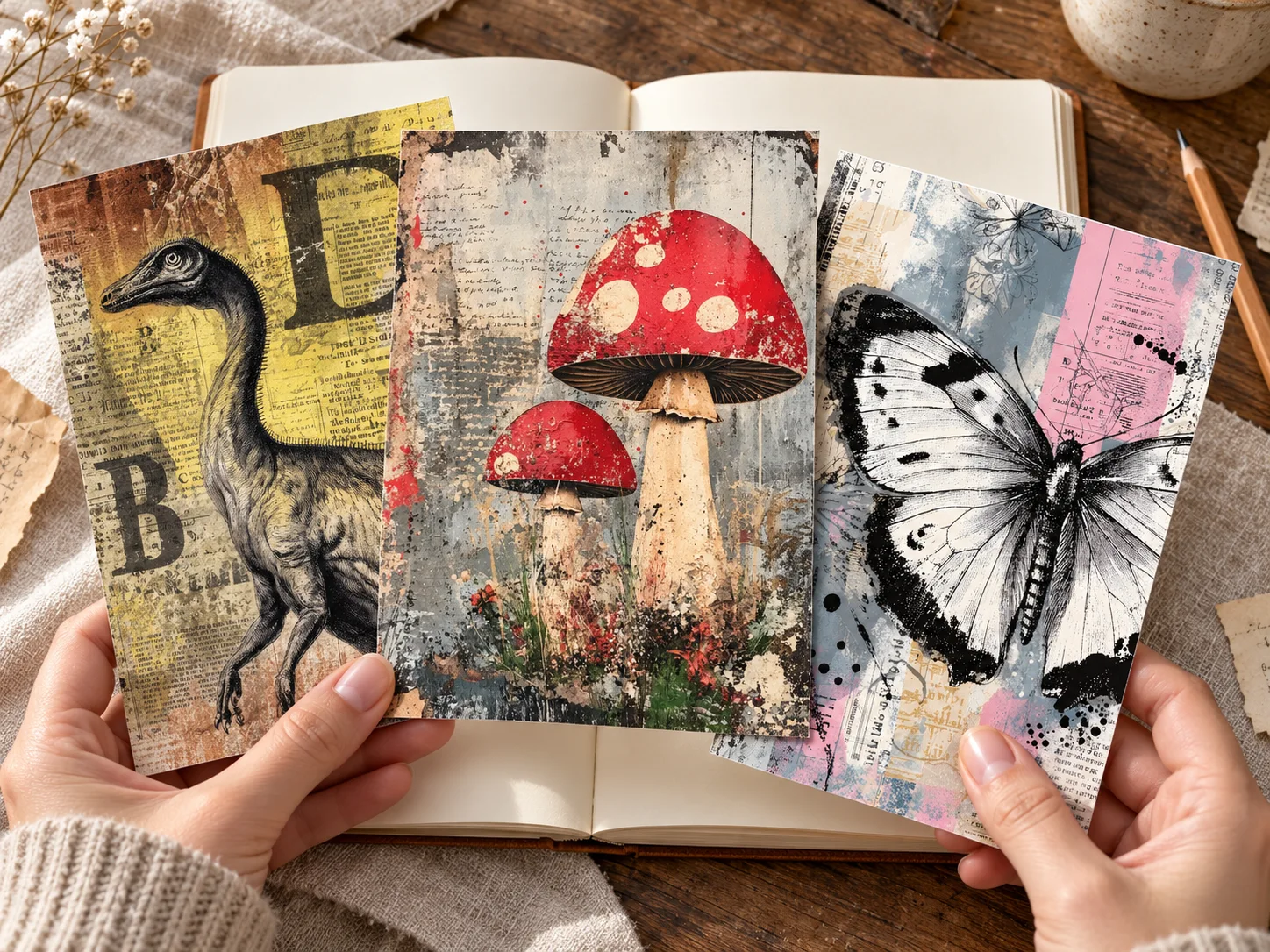
Dinosaur, mushroom and butterfly artwork can each give a page a starting point. Choose one subject and leave room beside it for your own notes.
Choose a theme for your journal
A page about a journey
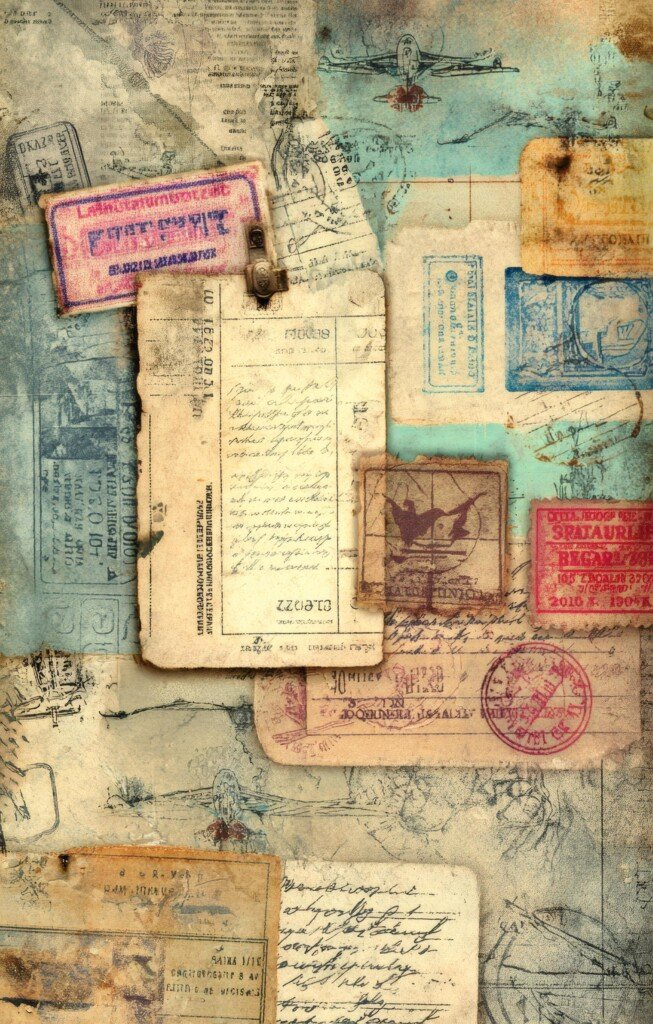
The pastel blue, pink and cream ticket artwork gives a travel entry a starting point. Place a copy of your own ticket in a plain pocket beside it, then write the date and destination on a separate card. The printed ticket shapes are part of a flat background, so they will not open like real pockets.
Actual listing preview. Digital download; print and finish it yourself.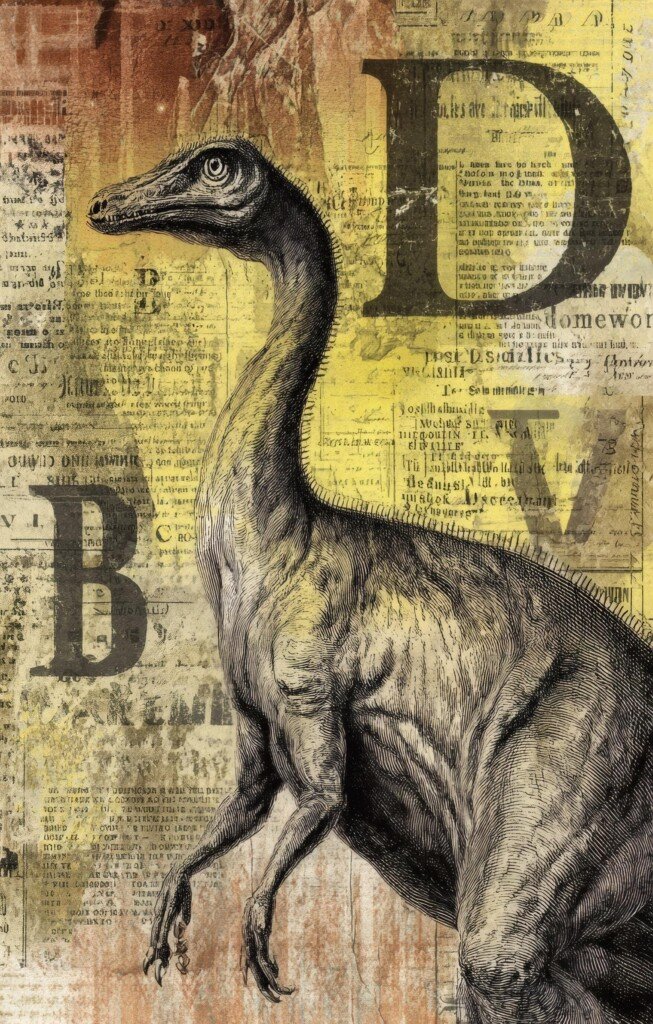
A museum visit or dinosaur notebook
The dark dinosaur silhouette and large printed letter give this page a strong focal point. Keep it on one side of a spread and put your museum notes on the other. It is decorative natural-history-style artwork, not a scientific identification chart. A smaller print can work as a rectangular journal insert.
Actual listing preview. Digital download; print and finish it yourself.Do you have to buy junk journal supplies?
No. An existing notebook, scissors and a paper-safe adhesive are enough to try a first page. Save an envelope from the post, a paper bag and a few scraps. Printables are useful when you want a particular theme or coordinated colours, but they are optional.
Before buying a large kit, decide what you are missing. If you already have plenty of patterned paper, a small set of writing cards may be more useful than another background collection. If cutting tiny shapes feels tiring, choose simple rectangular labels.
Can you write in it, or is it only for decoration?
You can do either. Some pages are mostly writing; others are small collages. A pocket can hide a private note, and a fold-out sheet can add writing room without making the main page crowded. Try closing the book before gluing everything down, especially when adding several layers near the spine.
For family photographs and papers you want to preserve, use copies in decorative work. The New York State Archives explains why mixed scrapbook materials need care, including the effects of acidic papers. A decorative vintage look does not make a page archival.
Woodland notes and butterfly collage
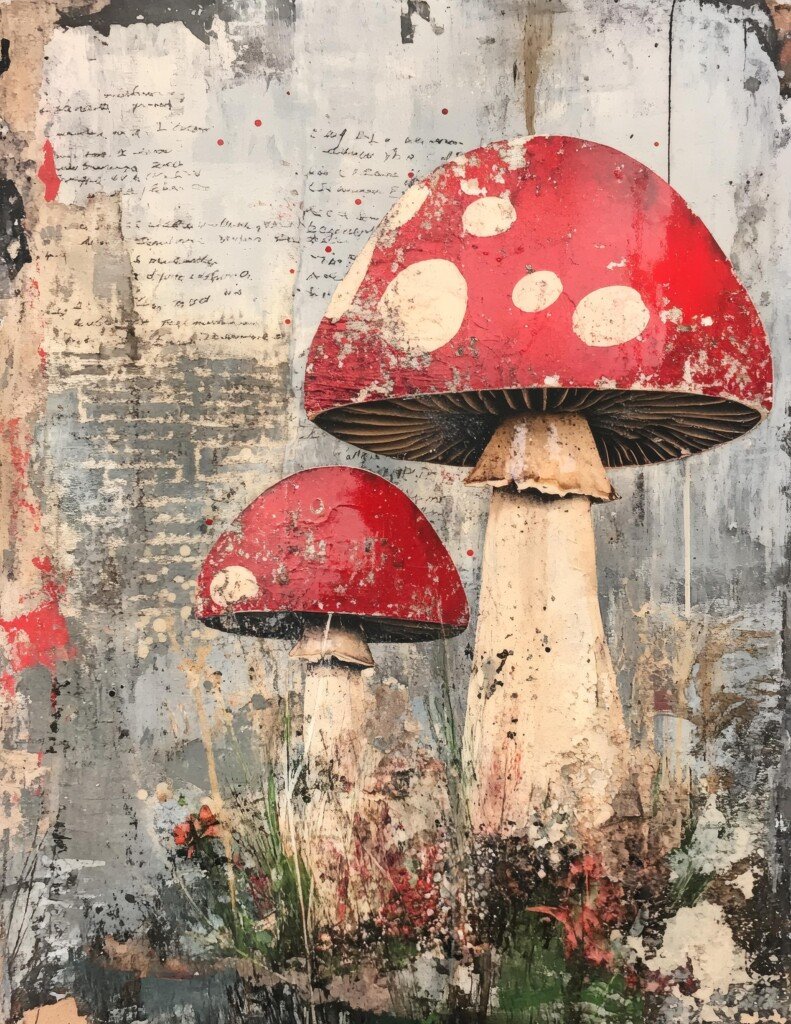
A woodland observation page
A large red mushroom against distressed grey paper makes this a bold choice for a nature journal. Add your own location, weather and observations on plain paper. Keep factual plant or mushroom identification in a trusted guide; the printed markings here are decorative. You can use a narrow strip if a whole patterned page feels busy.
Actual listing preview. Digital download; print and finish it yourself.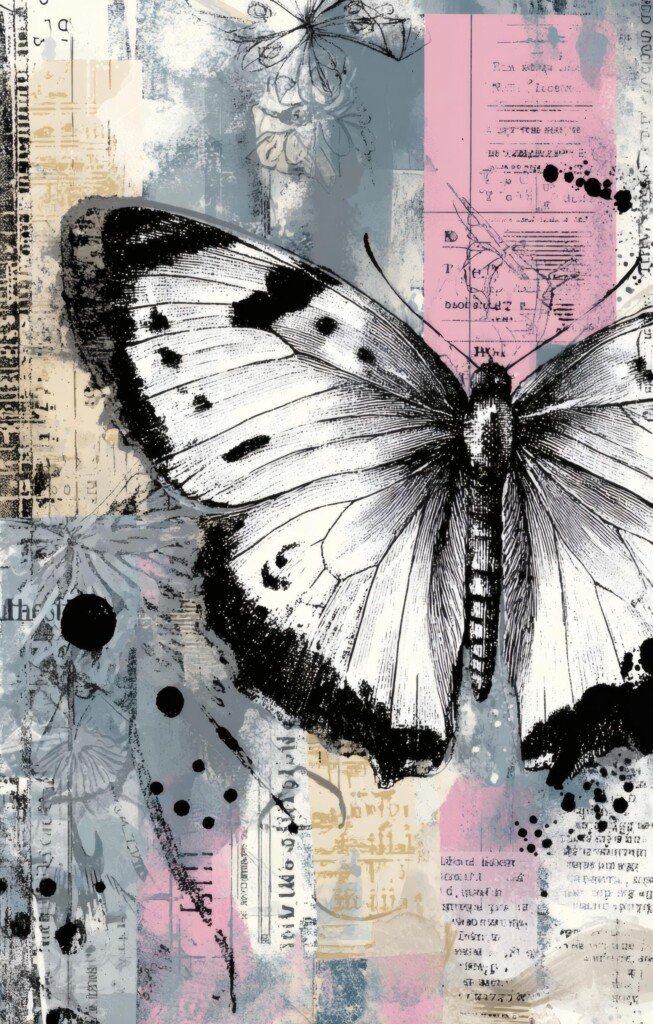
A colour-led collage
The butterfly page combines cool grey, pale pink and cream. Repeat one of those colours in a small paper scrap rather than filling the spread with more patterns. Leave the wing visible and write beside the image. This is a complete background page; it is not a sheet of separate butterfly cutouts.
Actual listing preview. Digital download; print and finish it yourself.Where should a beginner start?
Choose one notebook and make one spread about something ordinary: a book you finished, a favourite walk or the colours in your garden. Keep the remaining supplies in a small tray while you work. If you want a step-by-step starting project, follow our beginner notebook guide. You can decide whether you enjoy pockets, collage or writing after making a few pages, rather than buying everything first.
Watch a book-making demonstration
For a construction demonstration, Jennifer Maker has a notebook and accordion-style junk journal tutorial with a video. Her project uses her own files and includes Cricut instructions. You can learn from the book structure while choosing papers for your own project; you do not need to copy her finished layout.


