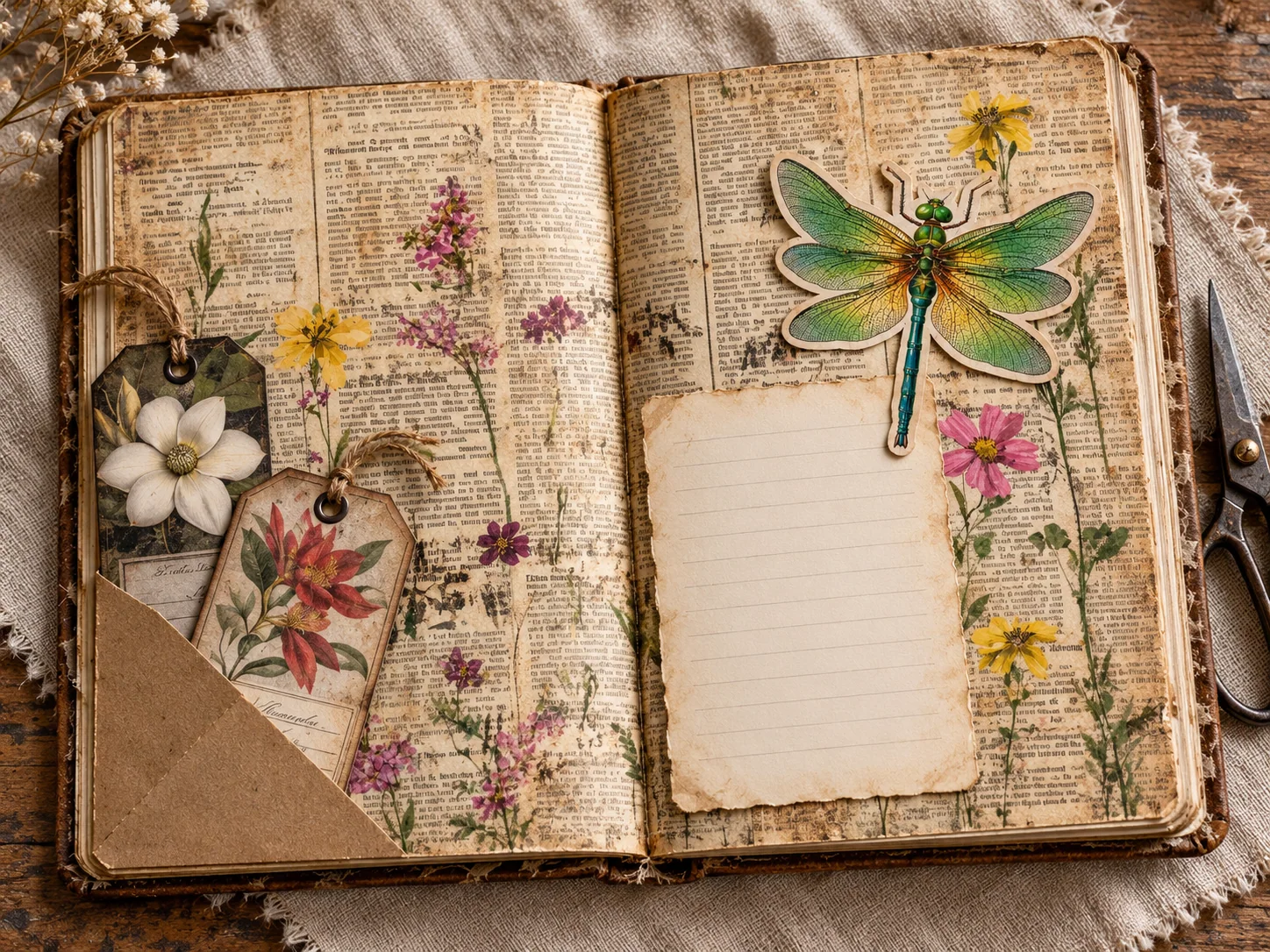
Choosing between a junk journal and a scrapbook starts with what you want the book to hold. A scrapbook often gives photographs and their story a clear sequence. A junk journal can mix writing, found paper, pockets and collage more freely. Both can include memories, and you can borrow ideas from either approach.
Picture how you will use the finished book. That will help you choose a base, leave enough space and buy only the supplies that fit your project.
Start with the story or start with the paper
If you want to record a holiday in order, start with the photographs and captions. Decide which moments belong together, then use decorative paper to support those memories. This is a straightforward scrapbook approach.
If a saved envelope, a printed flower or a colour combination is what makes you want to create, start there. Add a note or pocket as the page develops. That open-ended approach is common in junk journaling.
Neither approach requires an expensive album. Consider whether you need removable pages, room for many photographs, or a notebook you can carry. A thick collection of layered papers may need more space at the binding than a book used mainly for writing.
How the page layout changes
On a photo-led page, leave the photograph as the main point of interest. A thin strip of Vintage Newspaper Wildflower Journal Paper can frame the area without covering it. Place the caption where someone can connect it easily with the picture.
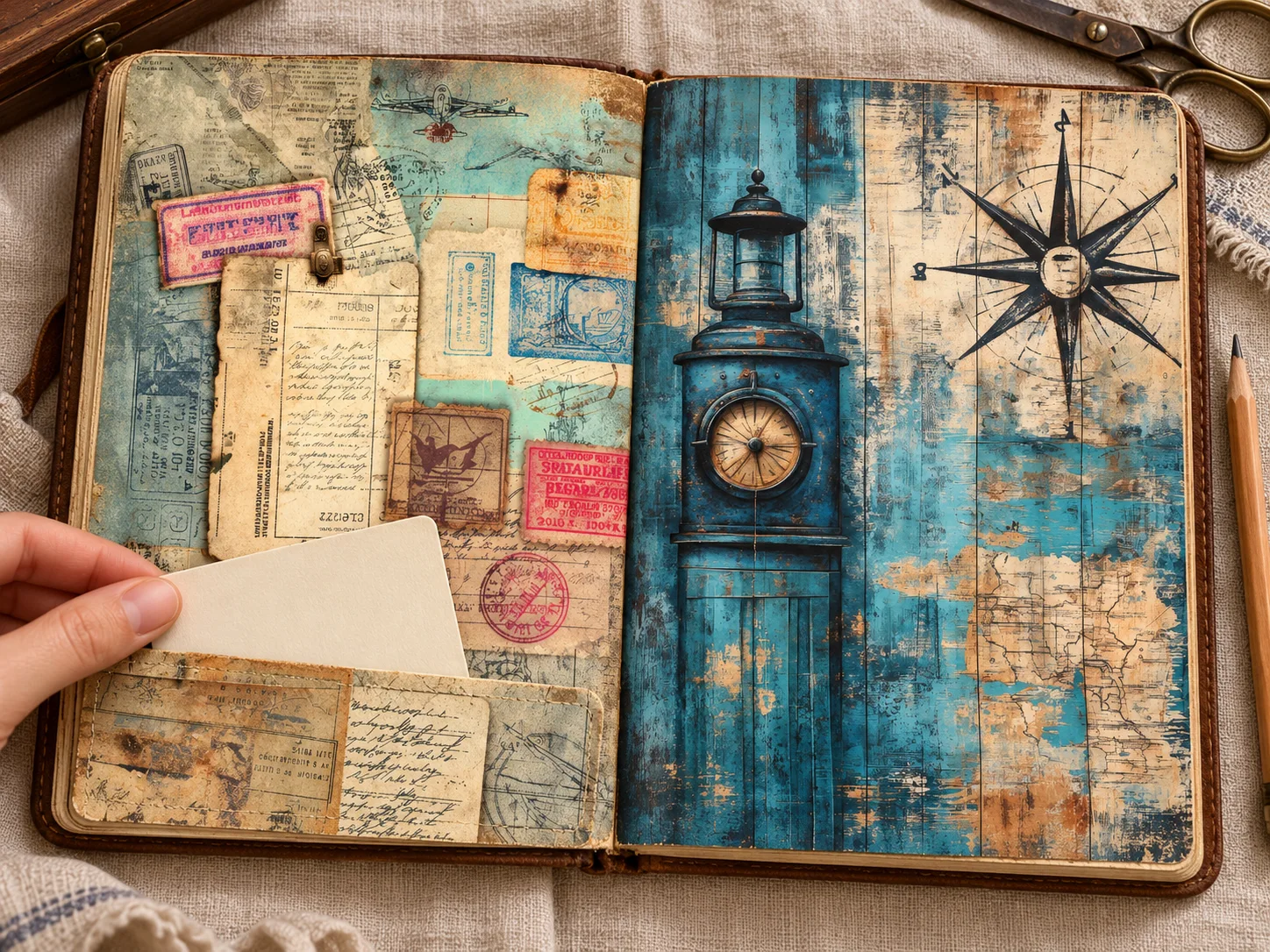
On a writing-led junk journal page, try a Vintage French Ledger background and a removable Vintage Library Card. You can add a short reading note or a list to the card, then keep the page itself fairly open.
For either style, lay everything out without adhesive first. Close the book gently. If a tag catches or the page becomes hard to turn, move the piece or reduce a layer before committing.
Keep the content easy to find
A pocket is useful for loose notes in either kind of book. Leave visible space for a date or label so you can find the insert later.
Can you use the same supplies?
Yes. Printable ephemera, plain papers, labels and small envelopes can work in both. A botanical tag might hold a date in a scrapbook pocket or a longer private note in a journal. Choose the size and placement to suit what you want to keep.
Before printing, consider the available space. A detailed background may be lovely on a full spread but distracting behind small handwriting. A wide photo mat can leave little room for a bulky pocket. Choose one feature to lead the page and let the other pieces support it.
Junk journal vs scrapbook: use the same paper differently
Travel: one photo or a pocket of memories
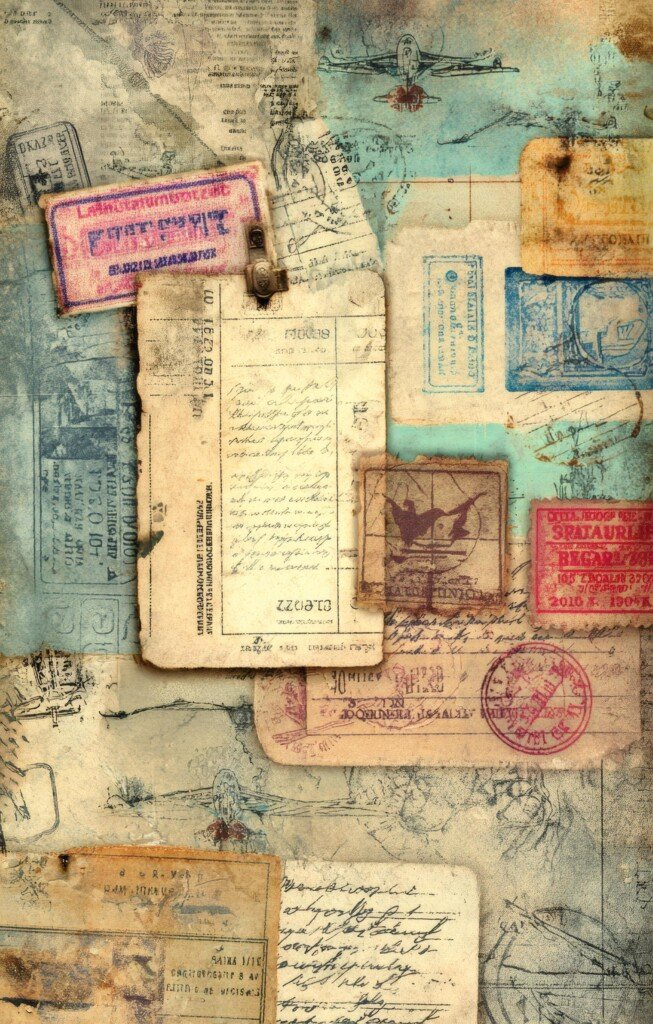
In a scrapbook, use the ticket paper as a narrow border around a photograph, leaving space for names and a date. In a junk journal, turn part of the same print into a pocket for a copy of your ticket and a folded note.
Actual listing preview. Digital download; print and finish it yourself.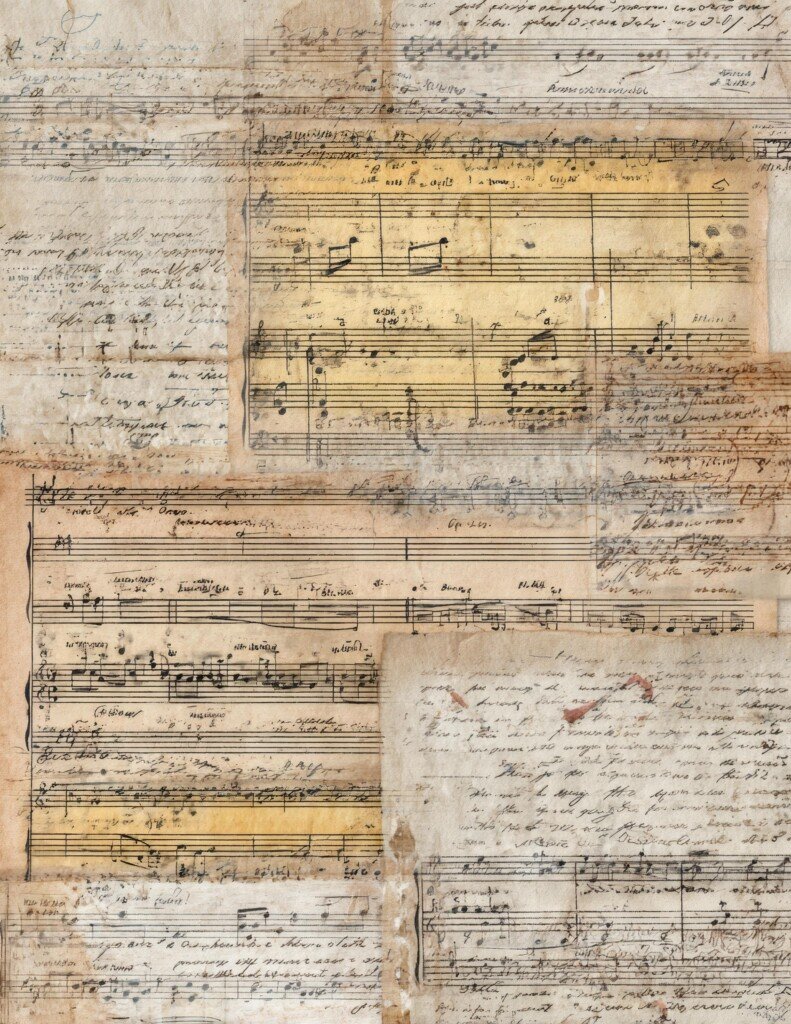
Music: document an event or a listening habit
A scrapbook page could pair this music background with a concert photo and a caption. A journal entry could hold a weekly listening list or a note about a song. Put personal writing on a plain panel so it stays distinct from the printed annotations. The decorative score fragments are not a usable songbook.
Actual listing preview. Digital download; print and finish it yourself.Take extra care with original photographs
A decorative paper craft and a preservation album have different demands. The Library of Congress guide to preserving scrapbooks explains the difficulties of mixed papers and other materials. For a family archive, consider suitable mounts or copies rather than attaching original photographs to unknown papers.
The Library’s photograph preservation advice discusses safer mounting choices. An old-looking printable does not make every paper, glue or embellishment suitable for long-term storage. Keep irreplaceable letters and photographs in suitable storage, and use copies for experimental cutting, ink and glue work.
Which one should a beginner choose?
Choose a small scrapbook project if you already have a group of photographs and want to tell their story. Choose a junk journal spread if you want to play with paper, write freely or keep everyday pieces without planning a whole album.
If both appeal, try a hybrid: one photo, a short caption, a pocket for a ticket and a fold-out note. You can make that in either kind of book. Our beginner notebook guide is a practical starting point for a small paper project.
Nature pages and library-card inserts
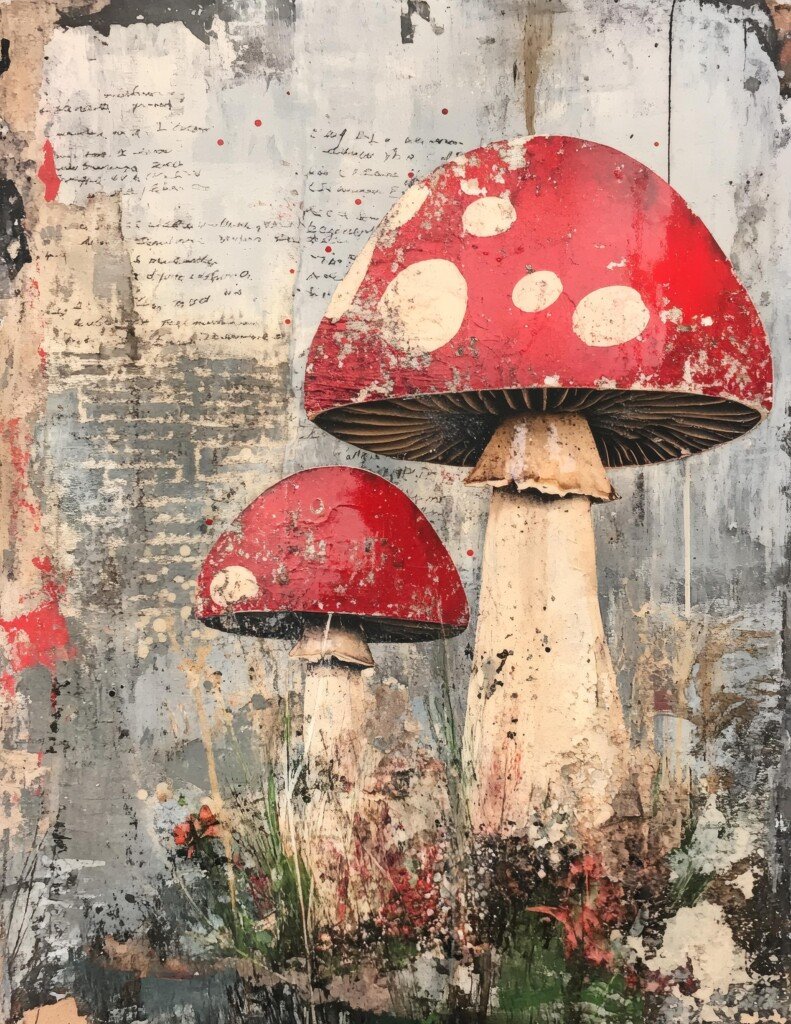
Nature: frame a walk or keep observations
Use the mushroom paper behind a small woodland photograph in an album, or as the opening page of a nature journal section. Leave space for the place and date either way. Keep identification notes separate from the decorative illustration, and use photographs or copies rather than storing damp natural materials between pages.
Actual listing preview. Digital download; print and finish it yourself.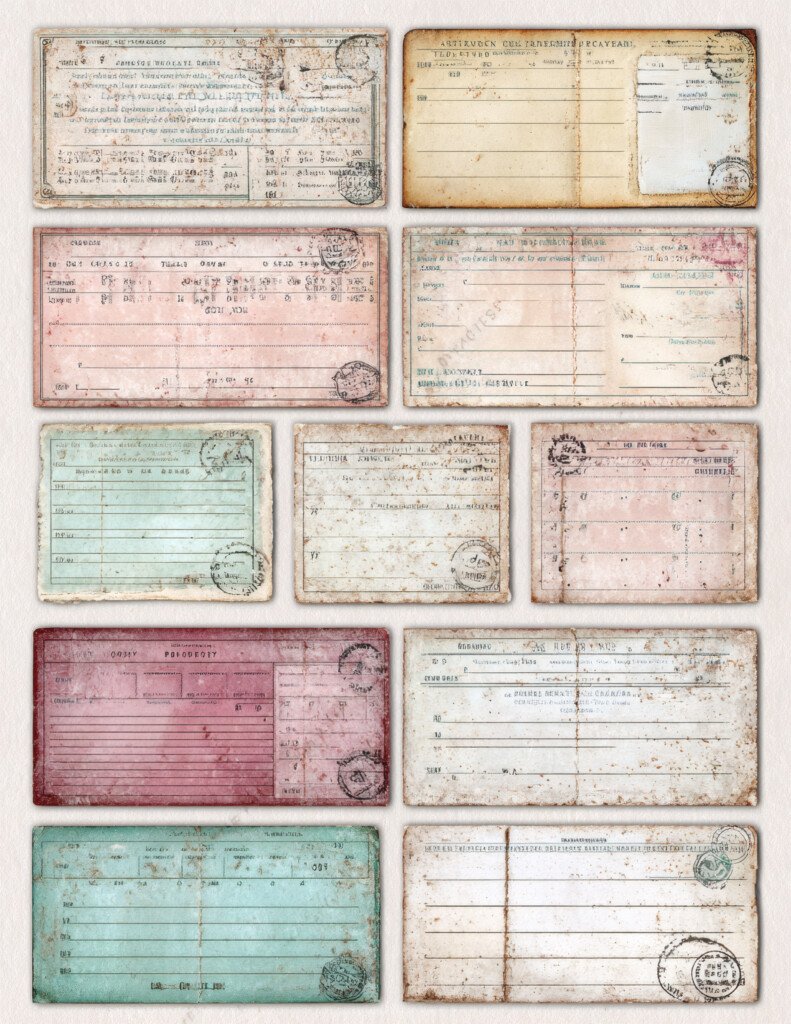
Library cards: captions or removable entries
A card can hold a short album caption, or it can slide out of a journal pocket with longer notes on the back. Check the writing area at the size you plan to print. If you reduce the sheet too much, a card that looks spacious on screen may become difficult to write on.
Actual listing preview. Digital download; print and finish it yourself.Do the pages need a matching theme?
No. A repeated colour or paper tone can make a book feel connected, but different pages can hold different moods. Keep a little plain paper available for captions and writing. Plain paper makes captions easier to read against a busy pattern, and you can use it with several different collections.


